
You’ve worked hard to buy a rental or second home — but what happens to it when you die?
Without a plan, your family could face delays, unexpected tax bills, or even be forced to sell the property. Here’s what you need to know.
Watch my video on inheritance tax and property planning — including how CGT and IHT apply when you pass property to your family.
Inheritance Tax (IHT) on Rental Property
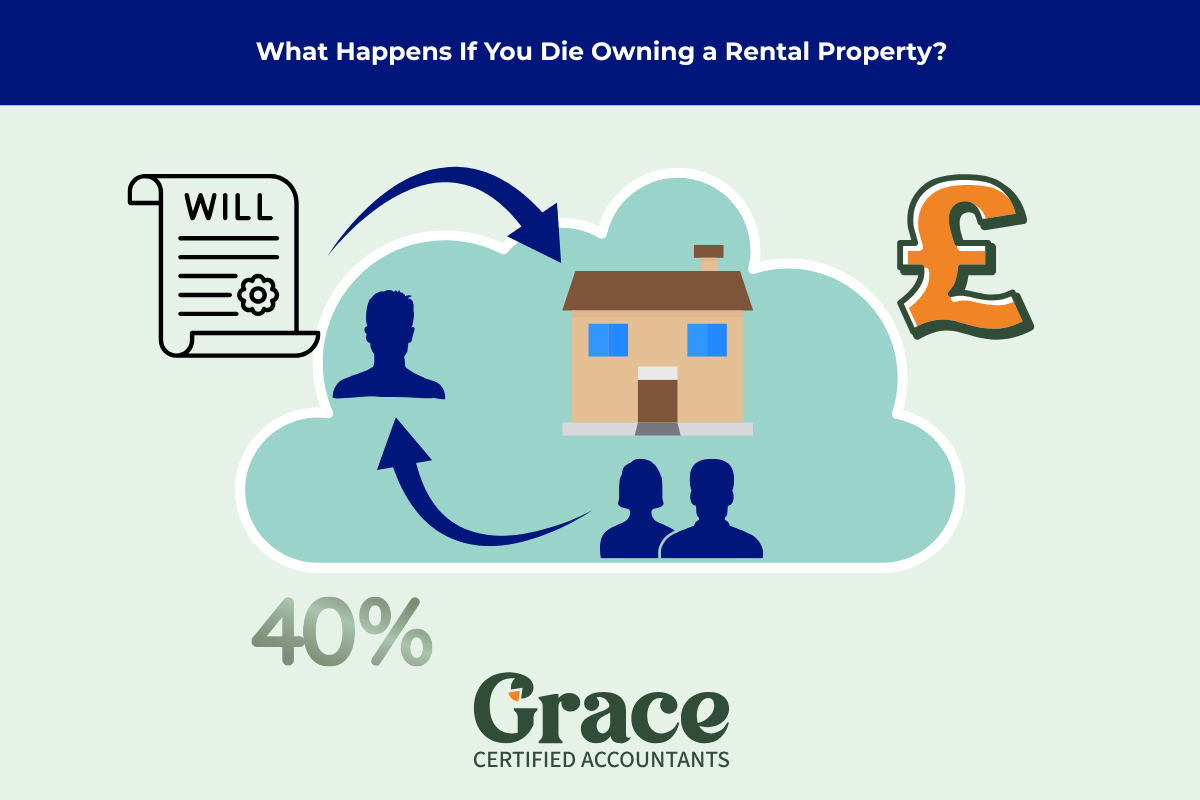
When you die, the full market value of your rental property at the date of death is added to your Estate.
- Every individual has a standard nil-rate band of £325,000.
- If you leave your main home to direct descendants, you may qualify for the residence nil-rate band of £175,000, bringing the total to £500,000.
- Rental or second properties don’t benefit from the main residence exemption.
That means if your Estate is worth more than the thresholds, the excess is taxed at 40%.
Capital Gains Tax (CGT) on Death
There is no CGT when you die. Instead:
- Your beneficiaries inherit the property at its market value on the date of death.
- This is called a “step-up in base cost”.
- CGT only applies if and when they sell it.
Example:
- You bought a rental for £100,000.
- At death, it’s worth £250,000.
- Your children inherit it at £250,000.
- If they later sell it for £260,000, they’re only taxed on the £10,000 gain.
👉 But remember: that £250,000 still counts towards your IHT threshold.
If your beneficiaries eventually sell the property, understanding how Capital Gains Tax is reported and calculated becomes important. This guide explains what HMRC expects and how the process works: How to Report Capital Gains Tax When You Sell a Rental Property (UK Guide 2025)
What Are Your Options Before You Die?
There are a few ways to plan ahead and reduce the tax impact:
✔ Keep the Property in Your Name
- Let it pass via your will.
- Works well if your Estate is below IHT thresholds.
- Simple, but heirs may face IHT if your Estate is larger.
✔ Gift the Property During Your Lifetime
- Could reduce IHT if you survive 7 years after the gift.
- May trigger Capital Gains Tax immediately if the property has increased in value.
- Not usually tax-efficient for heavily appreciated rentals.
Gifting property can seem straightforward, but the tax implications can be more complex than expected. This guide explains what happens when you transfer property to family members: Transferring Property to Your Spouse or Children: What Taxes Apply?
✔ Use a Trust
- Helps with succession planning and control.
- May reduce IHT exposure over time.
- Comes with upfront CGT, potential lifetime IHT charges, and ongoing admin costs.
In some cases, using a Trust can offer more control over how assets are passed on. This guide explains when and why Trusts are used in property planning: Understanding Trusts – When and Why to Use Them
Further reading:
Understanding Trusts – When and Why to Use Them
Transferring Property to Your Spouse or Children: What Taxes Apply?
Gifting Your Home to a Family Member: What Are the Tax Implications?
Final Thoughts
A rental property is often one of your most valuable assets — but without a plan, it could create financial problems for your loved ones.
Tax is just one piece of the puzzle. Timing, clarity, and making your wishes legally binding are just as important.
Need professional support?
If you want to plan ahead and understand how your property will be treated for tax purposes — including Inheritance Tax and potential future Capital Gains Tax — you can book a Paid Tax & Property Diagnostic Call.
On the call, we will:
- Understand your property and Estate position
- Identify any potential tax exposure
- Outline the most appropriate next steps