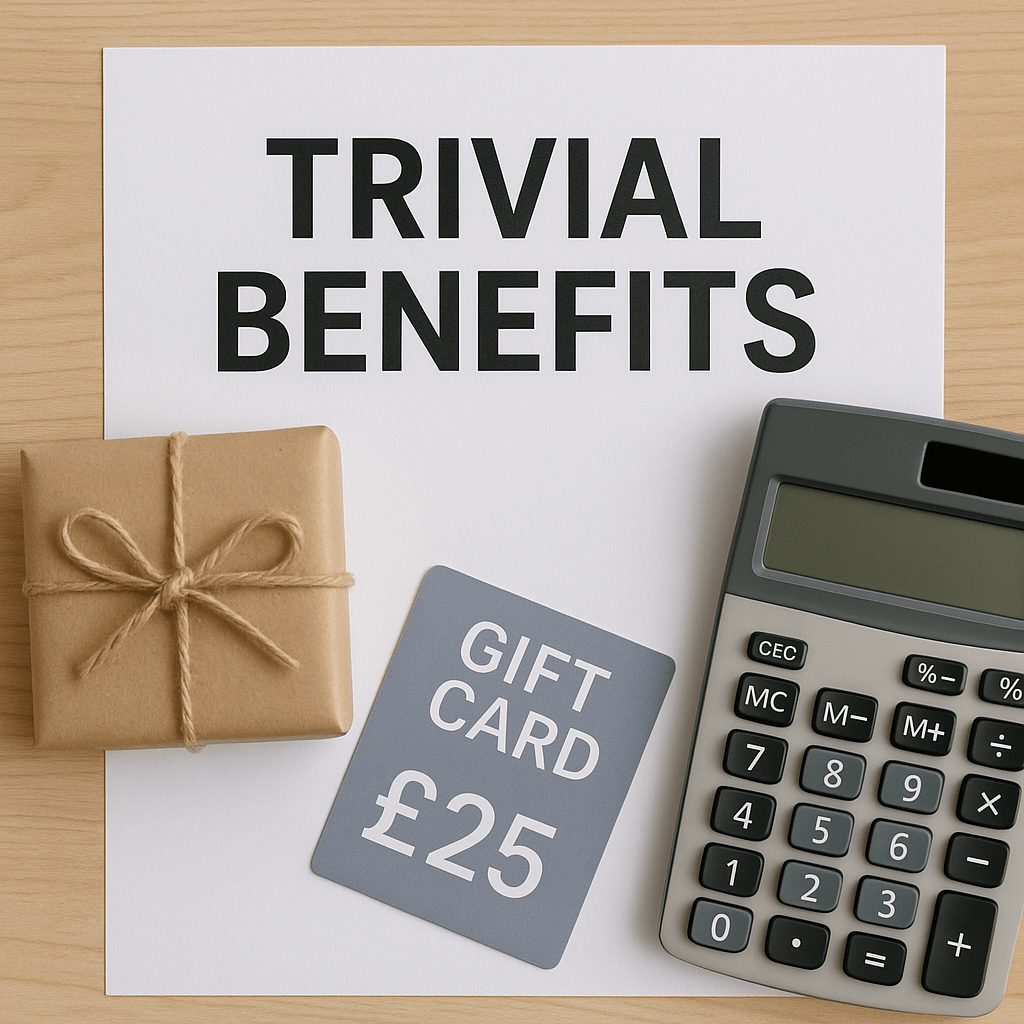

If you’re a small business owner or Director, you might want to reward staff or treat yourself with a small gift now and again. But what does HMRC allow — and where does Tax get triggered?
Enter: Trivial Benefits.
This guide explains what they are, the key rules, and common traps to avoid.
What is a Trivial Benefit?
A Trivial Benefit is a small, tax-free perk that doesn’t count as earnings. But it must meet all of these conditions:
- The cost is £50 or less (including VAT)
- It’s not cash or a cash voucher
- It’s not a reward for work or performance
- It’s not part of a salary sacrifice scheme
If it breaks any of these rules — it becomes Taxable.
If you’re unsure how different types of business expenses are treated for tax purposes, you may also find this helpful: A Guide to Allowable Expenses for Small Businesses
Examples of Allowable Trivial Benefits
- A bouquet of flowers to say thank you
- A £30 bottle of wine for a birthday
- A supermarket voucher that can’t be swapped for cash
- A box of chocolates given for no reason
These are all tax-free — as long as the £50 limit isn’t exceeded.
What’s Not Allowed
- Cash or vouchers exchangeable for cash (even part-cash)
- Big ticket items over £50 — even if you think it’s generous
- Performance-based gifts (e.g. “for hitting target last month”)
- Regular or expected gifts (monthly Costa gift card, etc)
- Salary alternatives (e.g. “instead of a bonus”)
What About Directors?
Directors of close companies (i.e. family-run or small companies) can also use the Trivial Benefits rule — but with extra limits:
- Still capped at £50 per gift
- But only 6 gifts per tax year
- Must follow all the usual rules
So yes, you can buy yourself a £45 bottle of whisky and expense it — just don’t do it every week.
Common Mistakes
- Giving a gift worth £51 — and not realising the whole £51 is taxable
- Using a gift card that’s basically cash
- Giving the same staff member the same gift every month
Tip: Keep a simple log of trivial benefits given — who, what, when, and the cost.
It’s also important to understand how HMRC views benefits and whether something could be reclassified as taxable. This explains why assumptions can sometimes lead to unexpected tax issues: Why You Shouldn’t Make Assumptions with HMRC
Further reading:
- A Guide to Allowable Expenses for Small Businesses
- Why You Shouldn’t Make Assumptions with HMRC
- Top 5 Tax Mistakes UK Business Owners Make (and How to Avoid Them)
Final Thought
Used properly, Trivial Benefits are a great way to show appreciation without tax complications. But they’re easy to misuse. When in doubt, check the rules or get professional advice.
Need professional support?
If you’re unsure where you stand or want to handle things properly from the outset, you can book a Paid Tax & Property Diagnostic Call.
On the call, we will:
- Understand your situation at a high level
- Confirm the correct approach
- Outline the next steps and fees