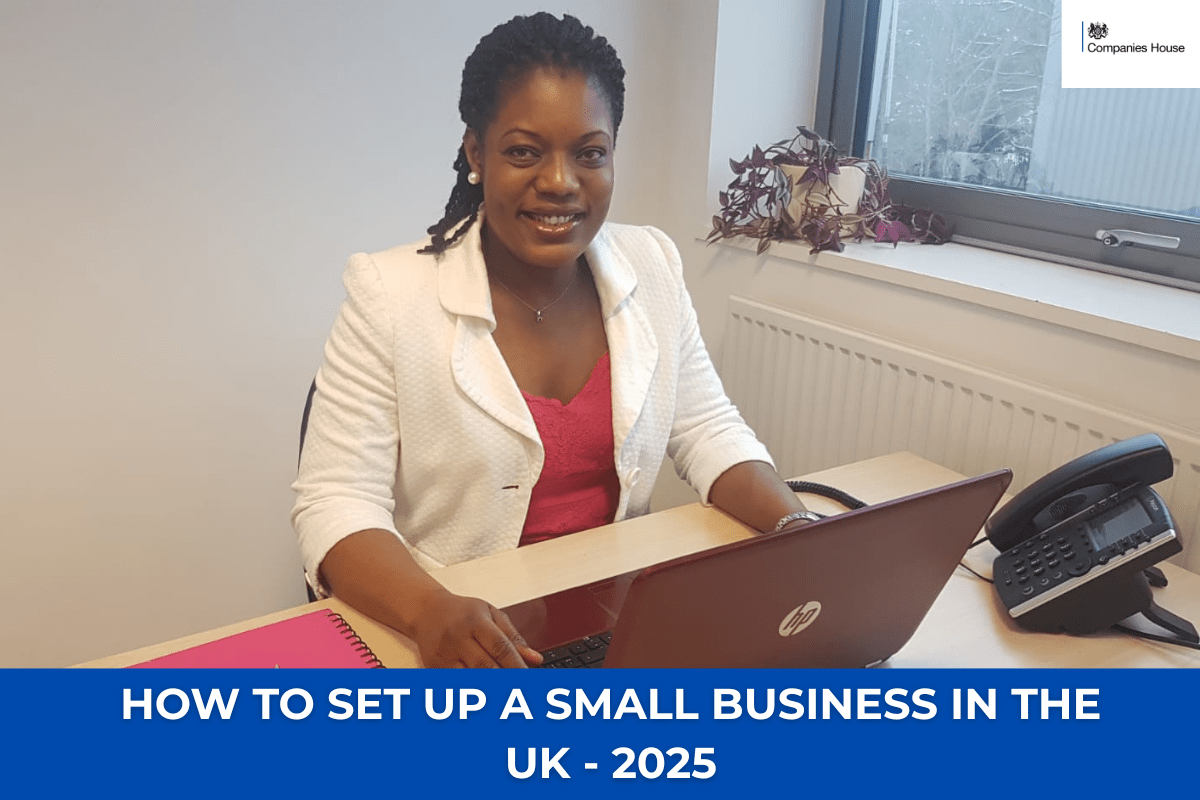

Thinking of starting your own business?
Starting a business is exciting — but it can be overwhelming if you’re not sure what to do first. This guide walks you through the steps to get your UK business off the ground.
Step 1: Choose Your Business Structure
Decide how you’ll operate:
- Sole trader – simpler setup, fewer reporting requirements, but you’re personally liable for debts.
- Partnership – share responsibilities and profits with one or more people.
- Limited company – separate legal entity, more admin, but can offer tax advantages and limited liability.
Tip: Your choice affects how you pay tax, file accounts, and take money from the business.
Watch my breakdown of Pros and Cons of Sole Trader vs Limited Companies — it could save you a lot of tax headaches later.
Step 2: Register with HMRC or Companies House
- Sole traders – register for Self Assessment with HMRC.
- Limited companies – register with Companies House and HMRC for Corporation Tax.
Deadlines:
- You must register by 5 October following the end of your first tax year as a Sole trader.
- Companies House registration is required before you start trading as a limited company.
Step 3: Open a Business Bank Account
- Limited companies must have a separate account.
- Sole traders should open one to keep personal and business finances separate.
Step 4: Understand Your Tax Obligations
- Sole traders – Income Tax + Class 2 & Class 4 National Insurance
- Limited companies – Corporation Tax + PAYE/NIC if paying salaries
- VAT – register if your turnover exceeds £90,000 (2025 threshold) or voluntarily if it suits your business.
VAT registration can be compulsory or voluntary. This guide explains how VAT works and when it makes sense to register: VAT Made Easy – Your Fun Guide to VAT
Step 5: Keep Accurate Records
- Track income, Expenses, Invoices, and Receipts.
- Use accounting software like QuickBooks, Xero, or FreeAgent.
- Keep records for at least 6 years.
Getting expenses right from the start makes a big difference. This guide explains what can and can’t be claimed: A Guide to Allowable Expenses for Small Businesses
Step 6: Protect Your Business
- Consider business insurance (public liability, professional indemnity, employers’ liability).
- Check licences or permits needed for your sector.
Step 7: Plan for Growth
- Set goals and track performance.
- Build a network of support — Accountants, Mentors, and other business owners.
If you’re unsure when to bring in professional support, this explains when it’s worth it and what you can handle yourself: Do I Need an Accountant for My Small Business?
Avoid Common Mistakes
Avoid common errors that cost small business owners time and money. This guide breaks down the most frequent issues and how to avoid them: Top 5 Tax Mistakes UK Business Owners Make (and How to Avoid Them)
Further reading:
- VAT Made Easy – Your Fun Guide to VAT
- A Guide to Allowable Expenses for Small Businesses
- Top 5 Tax Mistakes UK Business Owners Make (and How to Avoid Them)
Need professional support?
If you’re setting up a business and want to make sure everything is structured correctly from the start — including your tax setup, registrations, and ongoing obligations — you can book a Paid Tax & Property Diagnostic Call.
On the call, we will:
- Understand your plans at a high level
- Confirm the most suitable structure
- Outline the next steps and any required work